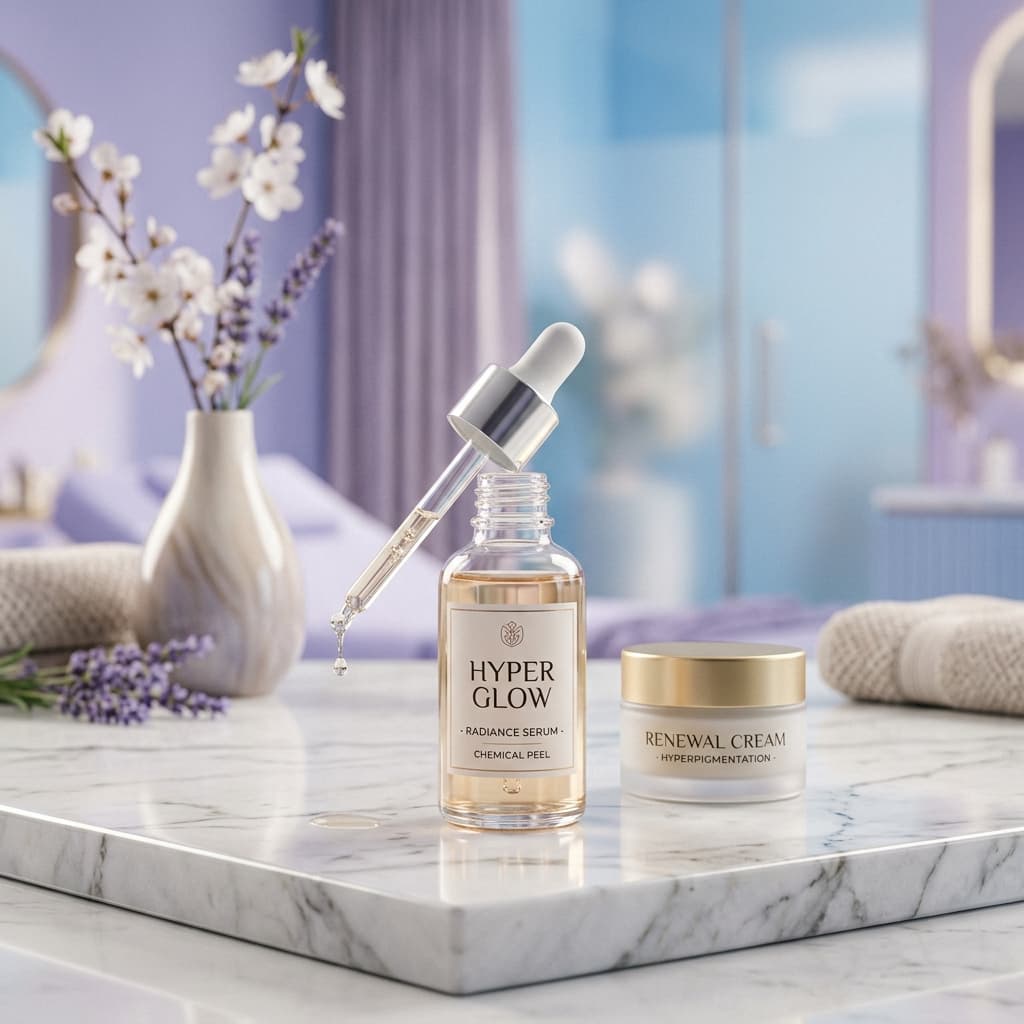
The Ultimate Guide to Chemical Peels for Hyperpigmentation
Understanding Hyperpigmentation
Hyperpigmentation is a common skin condition where patches of skin become darker than the surrounding area. It occurs when an excess of melanin, the brown pigment that produces normal skin color, forms deposits in the skin. This can be caused by sun damage, inflammation, or hormonal changes like melasma.
How Chemical Peels Help
Chemical peels use a chemical solution to improve and smooth the texture of the facial skin by removing its damaged outer layers. For hyperpigmentation, dermatologists often recommend superficial to medium depth peels utilizing ingredients like Glycolic Acid, Salicylic Acid, Lactic Acid, or TCA (Trichloroacetic Acid).
The Benefits of Professional Peels
- Exfoliation: They accelerate the skin's natural turnover rate.
- Pigment breakdown: They help to break up the melanin clusters in the epidermis.
- Collagen production: They stimulate new collagen, improving overall skin texture.
What to Expect During Your Treatment
During a chemical peel at Safeway Dermatology, your skin will first be thoroughly cleansed. The chemical solution is then applied. You may feel a mild stinging or tingling sensation. After a few minutes, the peel is neutralized or washed off, depending on the type used.
Post-treatment, your skin may appear red and feel tight, similar to a mild sunburn. Peeling usually starts 48 hours after the treatment and can last for 3-5 days. It is crucial to wear broad-spectrum sunscreen and avoid direct sun exposure during this healing phase.